
The Fourth Amendment is only one sentence long, but it affects your life more than you might think. It governs when police can search your home, your car, your phone, and even your body. Here’s the Fourth Amendment explained in plain English, including the landmark cases that shaped how it works today.
What the Fourth Amendment Says
The Fourth Amendment protects “the right of the people to be secure in their persons, houses, papers, and effects, against unreasonable searches and seizures.” It goes on to say that warrants must be based on probable cause, supported by an oath, and specific about the place to be searched and the things to be seized. That’s it, just one long sentence written in 1789. You can read the full text of the Fourth Amendment in the National Archives’ Bill of Rights transcript.
The founders had a clear reason for including it. Under British rule, officials used general warrants and “writs of assistance” to search colonists’ homes and businesses with almost no limits. The Fourth Amendment was designed to stop that from happening again.
The Key Words Explained
Unreasonable Searches and Seizures
The Fourth Amendment doesn’t ban all searches. It bans unreasonable ones. A search is when the government intrudes on something you have a right to keep private, and a seizure is when the government takes your property or restricts your freedom to leave.
Probable Cause
Probable cause means there’s a fair probability, based on facts, that a crime has been committed or that evidence will be found. It’s more than a hunch but less than certainty. Police usually need probable cause to get a warrant or make an arrest.
Warrants
A warrant is a court order authorizing a search or an arrest. To get one, police have to convince a neutral judge that they have probable cause. The warrant must describe specifically what’s being searched and what police are looking for.
When Police Don’t Need a Warrant
Warrants are the general rule, but there are many exceptions. If you consent to a search, police don’t need a warrant. If evidence is in plain view from a place officers are lawfully allowed to be, they can generally seize it.
Other exceptions include searches during a lawful arrest, emergencies where evidence might be destroyed, or someone is in danger, and many vehicle searches when police have probable cause. Courts have spent decades defining the limits of each exception. That’s why so many Fourth Amendment cases reach the Supreme Court.
Mapp v. Ohio and the Exclusionary Rule
A right isn’t worth much if there’s no consequence for violating it. That’s where the exclusionary rule comes in, which generally prevents prosecutors from using evidence obtained through an unconstitutional search in a criminal case. The Supreme Court adopted the rule for federal courts in Weeks v. United States in 1914.
For decades, though, the rule didn’t apply to state courts. That changed with Mapp v. Ohio in 1961. In 1957, Cleveland police forced their way into Dollree Mapp’s home looking for a bombing suspect, waving a piece of paper they claimed was a warrant. They didn’t find the suspect, but they found materials they considered obscene, and Mapp was convicted.
The Supreme Court overturned her conviction in a6- 33 decision. Justice Tom Clark wrote the majority opinion holding that the exclusionary rule applies to the states, overruling an earlier case called Wolf v. Colorado. Mapp v. Ohio transformed policing across the country because evidence from illegal searches could no longer be used in state prosecutions.
Other Landmark Fourth Amendment Cases
Katz v. United States (1967)
FBI agents recorded Charles Katz’s calls from a public phone booth by attaching a device to the outside of the booth. The court ruled that the Fourth Amendment protects people, not just places. This case introduced the idea of a “reasonable expectation of privacy,” which still guides Fourth Amendment law today.
Terry v. Ohio (1968)
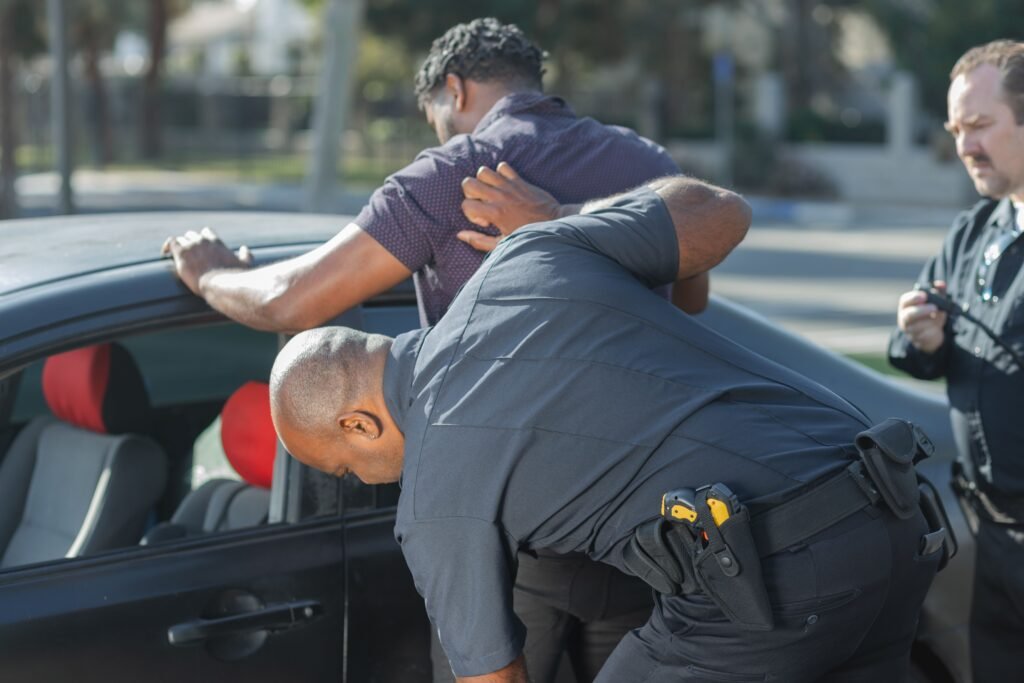
The court ruled that police can briefly stop someone and pat them down for weapons if they have reasonable suspicion that the person is involved in a crime and may be armed. That standard is lower than probable cause. These encounters are now known as “Terry stops,” or stop-and-frisk.
Riley v. California (2014)
The court unanimously ruled that police generally need a warrant to search the digital contents of a cell phone seized during an arrest. Chief Justice John Roberts noted how much of people’s private lives are stored on their phones. The decision was a major moment for privacy in the digital age.
Carpenter v. United States (2018)
The court held that police generally need a warrant to get historical cell phone location records from wireless carriers. Those records can reveal detailed information about where someone has been over long periods. The ruling extended Fourth Amendment protection to a new kind of digital data.
The Fourth Amendment in the Digital Age
The founders were thinking about homes, letters, and papers. Today, the biggest Fourth Amendment questions often involve phones, cloud storage, facial recognition, and data collected by apps. Courts are still figuring out how an 18th-century amendment applies to 21st-century technology.
That’s what makes the Fourth Amendment so interesting to follow. The words haven’t changed in more than two centuries, but the situations they cover keep evolving. Expect many more important cases in the years ahead.
Why One Sentence Still Matters So Much
The Fourth Amendment balances two things people care deeply about, which are public safety and personal privacy. Every search case asks where the line between them should be drawn. The answers have shifted over time, but the basic principle has stayed the same.
Understanding the Fourth Amendment helps you make sense of news stories about police searches, surveillance, and digital privacy. It’s one sentence that continues to shape everyday life in America. Not bad for something written more than 230 years ago.
Frequently Asked Questions
Does the Fourth Amendment apply to private companies?
No. The Fourth Amendment limits the government, not private businesses or individuals. Privacy from companies is governed by other laws, like state privacy statutes and federal rules for specific industries.
What’s the difference between reasonable suspicion and probable cause?
Reasonable suspicion is a lower standard based on specific facts suggesting criminal activity might be happening. It allows brief stops and pat-downs. Probable cause requires more evidence and is usually needed for arrests and warrants.
Does the exclusionary rule always apply?
No. The Supreme Court has created several exceptions over the years. One well-known example is the good faith exception, which can allow evidence obtained by officers who reasonably relied on a warrant that later turned out to be invalid.