
Some trials are remembered for their verdicts. Others are remembered for what they revealed about the societies that held them. These famous trials in history span more than 2,000 years, and each one left a mark that still shows up in how we think about justice today.
The Trial of Socrates (399 BC)
The Greek philosopher Socrates was put on trial in Athens, charged with impiety and corrupting the youth. A jury of hundreds of Athenian citizens found him guilty. He was sentenced to death and died after drinking hemlock.
His student Plato recorded Socrates’ defense in a work known as the Apology. It’s one of the earliest detailed accounts of a trial that we have. The case still raises questions about free thought, democracy, and the danger of punishing unpopular ideas.
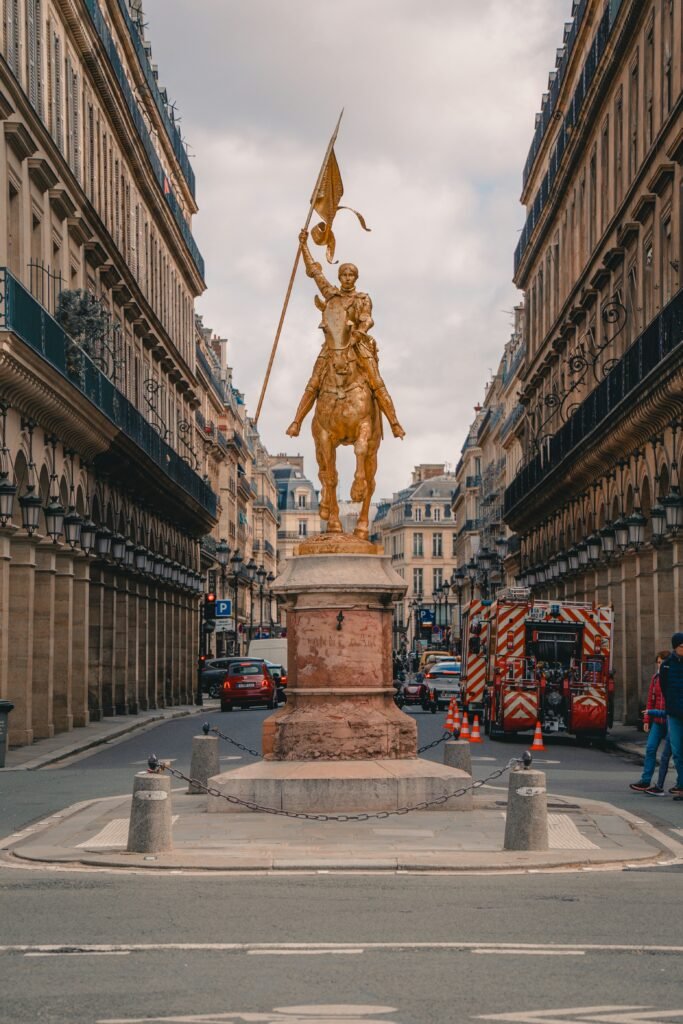
The Trial of Joan of Arc (1431)
Joan of Arc led French forces to key victories during the Hundred Years’ War before she was captured by the English and their allies. She was tried by a church court in Rouen on charges including heresy. The trial was heavily political, and she was burned at the stake at just 19 years old.
Twenty-five years later, a retrial ordered with the pope’s approval declared the original verdict invalid. The Catholic Church made her a saint in 1920. Her trial is a classic example of courts being used to reach a predetermined result.
The Trial of Galileo (1633)
Galileo Galilei supported the idea that the Earth revolves around the Sun, which conflicted with Church teaching at the time. The Roman Inquisition tried him, and he was forced to recant his views. He spent the rest of his life under house arrest.
In 1992, Pope John Paul II formally acknowledged that the Church had erred in its treatment of Galileo. The trial has become a lasting symbol of conflict between authority and scientific inquiry. It’s a reminder of how powerful institutions can resist new ideas.
The Salem Witch Trials (1692)
In colonial Massachusetts, a wave of accusations led to the arrest of more than 150 people for witchcraft. Nineteen people were hanged, and one man was pressed to death with heavy stones for refusing to enter a plea. Much of the evidence was “spectral evidence,” testimony that the accused’s spirit had appeared to victims.
Within a few years, many people involved expressed regret, and the colony later compensated some victims’ families. The Salem trials became a lasting warning about mass hysteria and flimsy evidence. The term “witch hunt” still carries that meaning today. The University of Virginia keeps the original court records online if you want to read the testimony yourself.
The Scopes Monkey Trial (1925)
John Scopes, a teacher in Dayton, Tennessee, was charged with violating a state law against teaching human evolution in public schools. The trial became a national spectacle, with Clarence Darrow defending Scopes and William Jennings Bryan assisting the prosecution. The high point came when Darrow called Bryan to the stand as an expert on the Bible.
Scopes was convicted and fined $100. The conviction was later overturned on a technicality. The trial became a symbol of the debate between science and religion in schools, and it inspired the play and film “Inherit the Wind.”
The Nuremberg Trials (1945 to 1946)
After World War II, the Allies put leading Nazi officials on trial before an international military tribunal in Nuremberg, Germany. Defendants were charged with crimes against peace, war crimes, and crimes against humanity. Twelve were sentenced to death, and others received prison terms.
Nuremberg established the principle that individuals can be held responsible for war crimes, even if they claimed to be following orders. It laid the groundwork for modern international criminal law. Later tribunals and the International Criminal Court build on its legacy. The U.S. Holocaust Memorial Museum has a detailed history of the tribunal covering the defendants, charges, and sentences.
The Chicago Seven Trial (1969 to 1970)
After protests during the 1968 Democratic National Convention, eight activists were charged with conspiracy and inciting a riot. Black Panther leader Bobby Seale’s case was separated after Judge Julius Hoffman ordered him bound and gagged in the courtroom, which turned the Chicago Eight into the Chicago Seven. The trial was chaotic, with defendants openly mocking the proceedings.
Five defendants were convicted of crossing state lines to incite a riot, but an appeals court reversed the convictions in 1972. It cited the judge’s hostility toward the defense, among other problems. The trial became a symbol of the political divisions of the Vietnam War era.
The O.J. Simpson Trial (1995)
Former football star O.J. Simpson was tried for the murders of his ex-wife Nicole Brown Simpson and her friend Ron Goldman. The televised trial captivated the country for months. Simpson was acquitted, although a civil jury later found him liable for the deaths.
The case exposed deep divisions over race and policing in America. It also changed how the media covers trials. Many people still remember exactly where they were when the verdict was announced.
What These Famous Trials Have in Common
Across centuries and continents, the most famous trials tend to share a few things. They happen during moments of fear, change, or division, and they force people to confront hard questions about power and fairness. Many of them are remembered as warnings.
Studying these trials is one of the best ways to understand why modern legal protections exist. Rights like due process, the presumption of innocence, and fair evidence rules grew out of lessons learned the hard way. Many of those protections were later cemented by the Supreme Court in landmark cases like Gideon v. Wainwright and Miranda v. Arizona. Each of these trials played a part in that story.